- New
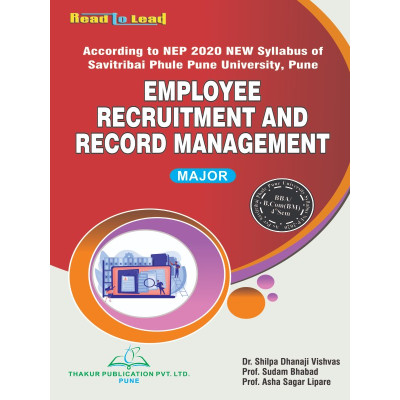

ISBN : 9789372907360
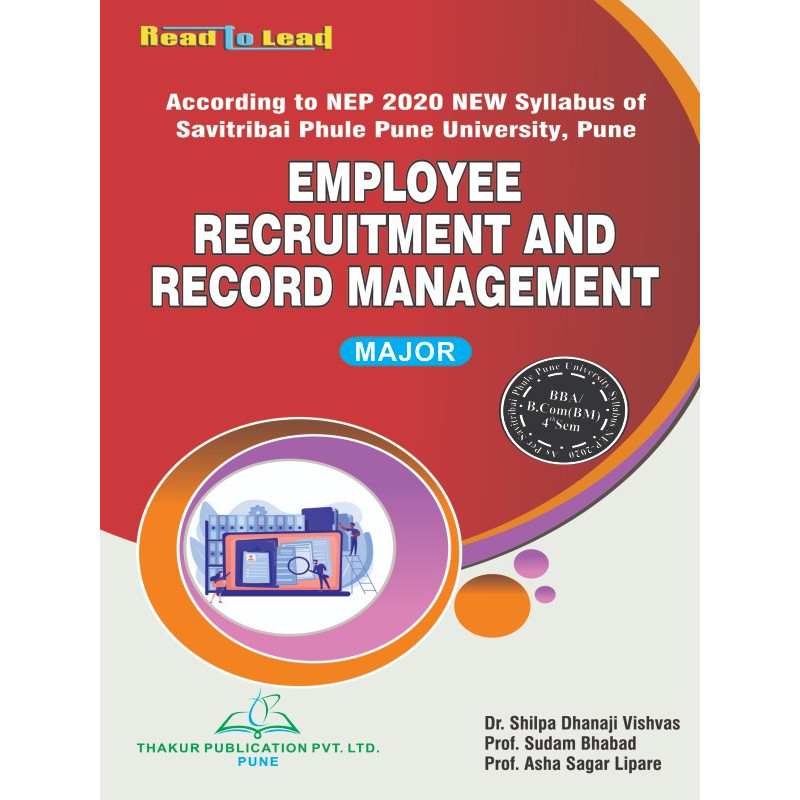
Authors : Dr. shilpa Dhanaji Vishvas, Prof. Sudam bhabad, Prof. Asha Sagar Lipare
ISBN : 9789372907360
Authors : Dr. shilpa Dhanaji Vishvas, Prof. Sudam bhabad, Prof. Asha Sagar Lipare
Tax excluded
Syllabus
BBA & B.Com-BM
Course Code: MJ-251-ERRM
Employee Recruitment and Record Management
|
Unit
|
Title and Contents
|
No. of
Lecture Hours
|
|
|
1
|
Manpower Planning and Forecasting |
15 |
|
|
|
1.1. 1.2. 1.3. 1.4. 1.5. 1.6. 1.7.
|
Concept & importance of manpower planning. Process of manpower planning. Job analysis & skill/competency mapping. Demand forecasting techniques. Supply forecasting techniques. Gap analysis & HR action plans. Contemporary trends in workforce planning. |
|
|
2
|
Recruitment and Selection |
15 |
|
|
|
2.1. |
Meaning, Definition, Objectives of recruitment
|
|
|
2.2. |
Factors influencing recruitment |
||
|
2.3. |
Recruitment Process |
||
|
2.4. |
Sources of Recruitment |
||
|
2.4.1. |
Internal Sources |
||
|
2.4.2. |
External Sources |
||
|
2.5. |
Modern Methods of Recruitment: - ATS (Applicant Tracking System), Virtual Reality Communications, Artificial Intelligence system, Employer branding, social media platforms (Instagram, Facebook, LinkedIn) for recruitment, Online Portals for recruitment, Mobile Recruitment |
||
|
2.6. |
Meaning, Definition, Difference between recruitment & selection |
||
|
2.7. |
Selection Process |
||
|
2.8. |
Types of Tests: Intelligence test, Achievements test, Aptitude test, Personality test, Graphology test, Polygraph test, Integrity tests, Projective tests |
||
|
2.9. |
Interview: Types of Interviews – Structured, unstructured, semi structured, Individual interview, Group interview, Depth interview, Stress interview, Assessment interview, Exit Interview |
||
|
2.10. |
Placement & Induction |
||
|
3
|
Introduction to Employee Records and Documentation |
15 |
|
|
|
3.1. |
Meaning and definition of employee records, significance of employee record management in HR operations, impact of poor recordkeeping on compliance and organizational performance. |
|
|
|
3.2. |
Types of employee records: Pre-employment: Application form, resume, interview sheets On boarding: Offer letter, joining forms, ID proofs, induction checklist |
|
|
|
3.2.1. |
Service Records: Attendance, leave, payroll, training, performance appraisals · Behavioral Records: Warning letters, disciplinary files · Statutory Records: Registers, PF/ESI forms, compliance documents · Exit Records: Resignation, F&F settlement, exit interview |
|
|
|
3.2.2. |
Mandatory registers: daily muster, leave register, wage register, fines register, overtime register, Memo register, etc. |
|
|
|
3.2.3. |
Document retention periods as per legal requirements |
|
|
|
3.2.4. |
Employer liabilities and penalties for non-maintenance |
|
|
|
3.3. |
Brief overview of typical Indian labour law documentation requirements (Shops & Establishment Act, Factories Act, ESI Act, EPF Act, Payment of Wages Act, Minimum Wages Act, Employees Compensation Act, Bonus Act, Gratuity Act, POSH Act) |
|
|
|
3.4. |
Structure and components of personnel files, Indexing, filing systems, document version control, Verification checklist (KYC, education, experience, statutory forms), Confidentiality protocols and access control, Safe storage practices: physical and digital file management. |
|
|
|
3.5. |
Concept of Human Resource Information Systems (HRIS) and digital employee databases, core HRIS modules |
|
|
|
3.6. |
Benefits and challenges of digital records: efficiency, analytics-readiness, security, data quality, and change management |
|
|
4
|
HR Information Systems and Digital Record Management |
15 |
|
|
|
4.1. |
Introduction to HRIS: Meaning and significance of HR Information Systems, difference between traditional HR and digital HR systems, role of HRIS in modern HR functions, scope of HRIS, objectives of HRIS, need for HRIS |
|
|
|
4.2. |
Evolution of HRIS: Pre-computerized HR systems, Emergence of computerized payroll systems Integration of HR modules in ERP systems, Cloud-based HRIS and SaaS platforms (like Workday, SAP Success Factors)AI-driven HR systems |
|
|
|
4.3. |
HRIS role in HR planning and forecasting, recruitment systems, HRIS in selection & on boarding, recruitment analytics, dashboards, workflows |
|
|
|
4.4. |
Meaning and concept of Digital Record Management (DRM), purpose and importance of record management transition from physical to digital records, benefits: accuracy, accessibility, cost & time efficiency |
|
|
|
4.5. |
Legal & Ethical Issues in Record Management: Importance of confidentiality & privacy, data protection laws, ethical handling of personal and sensitive employee information, rights of employees related to data usage. |
|