- New
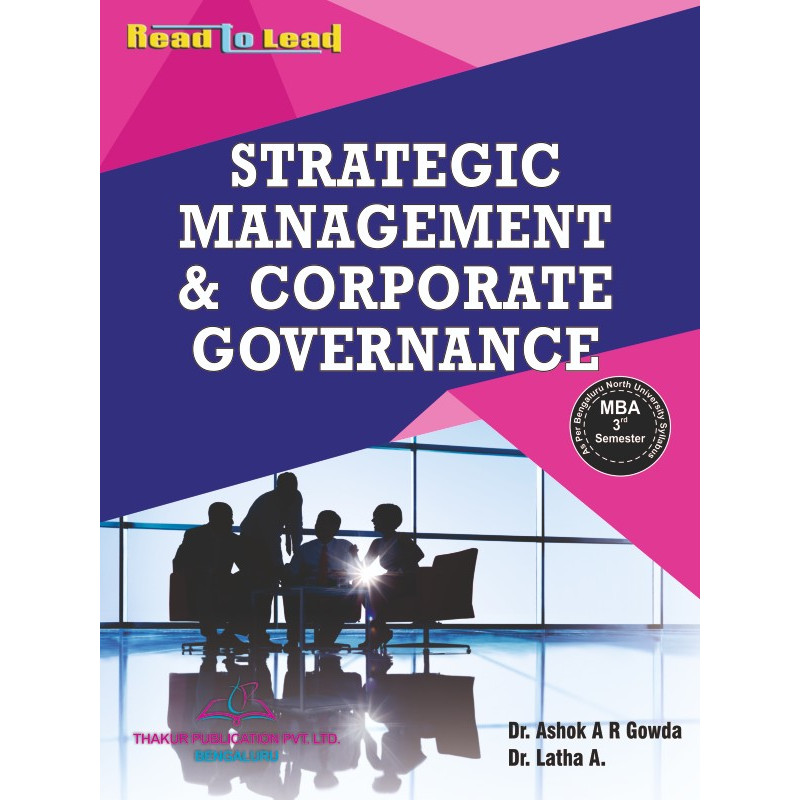
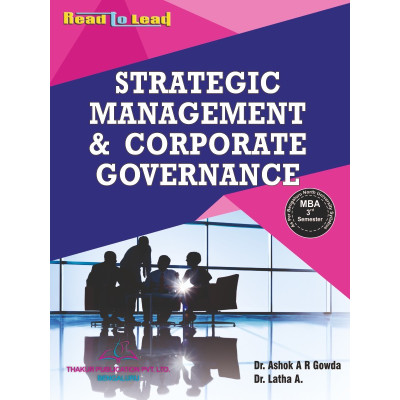

Authors : Dr. Ashok A.R Gowda, Dr. Latha A
ISBN : 9789361801129
PERSPECTIVE OF THE COURSE:
In the dynamic and competitive world of business, strategic thinking has become essential for organizational success and long-term sustainability. Strategic Management enables future managers to understand how organizations formulate, implement, and evaluate strategies in response to changing business environments. This course provides a comprehensive understanding of strategic decision-making, competitive analysis, and corporate direction. It equips students with the ability to assess internal capabilities, respond to market challenges, and make informed strategic choices. In addition, the course integrates the principles of Corporate Governance, emphasizing responsible leadership, transparency, and ethical business practices. It prepares students not only to think strategically but also to act with integrity and accountability in managerial roles. By combining real-world case studies with strategic frameworks, this course develops practical skills that help management students become effective strategists and responsible corporate leaders.
COURSE OBJECTIVES AND OUTCOMES: OBJECTIVES:
● To provide a clear understanding of the concepts, processes, and significance of strategic management in dynamic business environments. ● To enable students to analyze internal and external business environments using strategic tools and frameworks. ● To develop the ability to formulate, evaluate, and implement effective business strategies at corporate, business, and functional levels. ● To promote ethical decision-making and understanding of corporate governance principles for responsible and sustainable leadership.
OUTCOMES:
Upon successful completion of the course, students will be able to: ● Understand and apply the fundamental concepts and frameworks of strategic management in real business contexts. ● Analyze complex business environments and evaluate strategic options using appropriate analytical tools. ● Formulate and select suitable strategic alternatives for achieving competitive advantage and business growth.
● Execute strategic plans effectively by aligning resources, organizational structure, and control mechanisms. ● Demonstrate awareness of corporate governance principles and apply ethical decision-making in managerial roles.
MODULE 1: STRATEGY AND PROCESS
Historical perspective of Strategic management, Conceptual framework for strategic management, The Concept of Strategy, Strategic Management Process and Model – Stakeholders in business – Vision, Mission and Purpose – Business definition, Objectives and Goals.
MODULE 2: COMPETITIVE ADVANTAGE
PESTEL Analysis, SWOC Analysis, Porter‘s Five Forces Model ,The Competitive Profile Matrix (CPM), Value Chain Analysis, Globalization and Industry Structure- Resources, Capabilities and Competencies – Core Competencies, Generic building blocks of Competitive Advantage - Distinctive Competencies – Avoiding failures and sustaining competitive advantage
MODULE 3: THE STRATEGIC ALTERNATIVES
Corporate Level Strategies : Stability, Expansion, Retrenchment and Combination strategies, Vertical and horizontal Integration, Diversification and Strategic Alliances - Building and Restructuring the corporation. Business Level Strategy: Cost, Differentiation, and Focus Strategies - Strategy in the Global Environment. Strategic Analysis and Choice: Environmental Threat and Opportunity Profile (ETOP) – Organizational Capability Profile - Strategic Advantage Profile - Corporate Portfolio Analysis – GAP Analysis - Mc Kinsey's 7s Framework - GE 9 Cell Model – BCG Matrix - Balance Score Card, Internal Factor Evaluation (IFV) Matrix.
MODULE 4: CURRENT STRATEGIC ISSUES - STRATEGY IMPLEMENTATION & CONTROL.
Managing new technology and innovation – Managing during economic crises and business disruptions – Emerging directions in strategic thinking – Strategic issues for Non-Profit Organizations (NPOs) and Micro, Small & Medium Enterprises (MSMEs) – New business models and strategies for the digital and internet-driven economy. Strategy Implementation Process – Resource allocation and capability building – Designing organizational structure for strategy implementation – Strategic control systems: types and approaches – Matching structure and control to strategy – Managing strategic change: leadership, communication, 85 culture – Politics, power and conflict in strategy implementation – Techniques of strategic evaluation and control.
MODULE 5 : CORPORATE GOVERNANCE
Concept and Meaning of Corporate Governance – Importance of governance in modern business – Evolution and development of Corporate Governance in India - Relationship between corporate governance and internal/external stakeholders, Board of Directors: structure, composition, roles and responsibilities accountability towards shareholders – Committees under corporate governance (Audit Committee, Nomination and Remuneration Committee, CSR Committee) – Ethical conduct, integrity, transparency and disclosure practices. Regulatory framework for Corporate Governance: SEBI guidelines, Companies Act provisions – Corporate governance challenges and best practices
PEDAGOGY
The course can be delivered through a balanced combination of conceptual learning and practical application to develop strategic thinking and decision-making skills. Classroom sessions will focus on interactive lectures, discussions, and real-time analysis of business scenarios. Case studies from leading national and global organizations to be used to connect theory with practice and enhance problem-solving abilities. Students will be encouraged to participate in group projects, strategy simulations, and presentations that foster teamwork and analytical reasoning. In addition, live organizational studies and industry interactions will be integrated to provide practical exposure to strategic issues and corporate governance practices. This approach ensures experiential learning and prepares students for real-world managerial challenges.
SKILL DEVELOPMENT ACTIVITIES (SUGGESTED)
● Preparation and presentation of strategic analysis reports such as SWOT, PESTEL, and Porter’s Five Forces for selected industries or organizations. ● Case study evaluation on strategy formulation and implementation, focusing on real corporate situations and decision-making challenges. ● Group strategy simulation or role-play exercises based on boardroom decision-making, ethical issues, and strategic conflict resolution. ● Corporate governance assessment of listed companies through analysis of annual reports and board structures.