
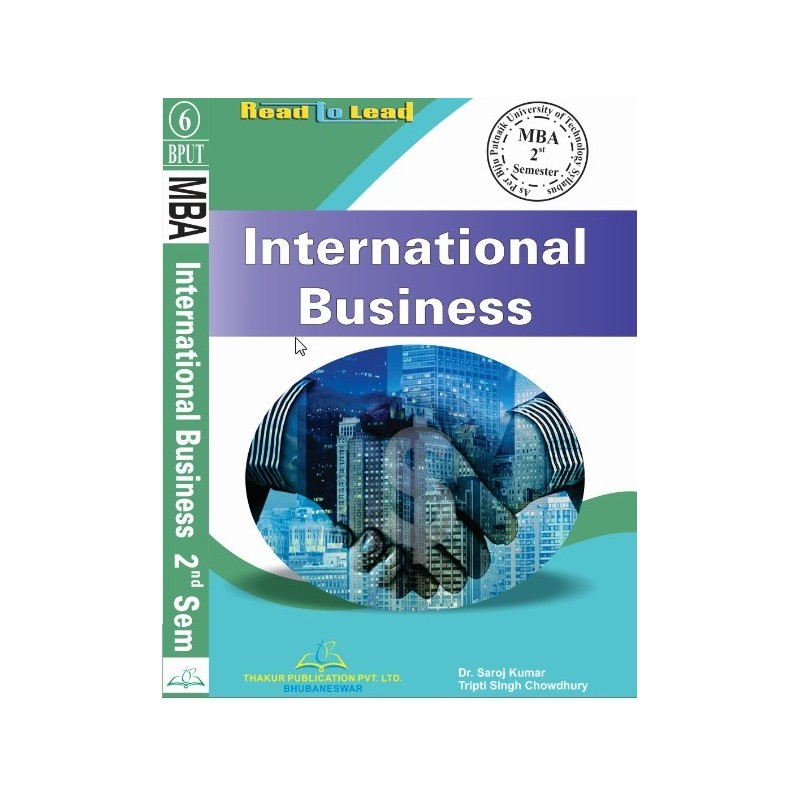


Dr. Saroj Kumar, Tripti Singh Chowdhury
978-93-88809-48-1
Syllabus18 MBA 206
INTERNATIONAL BUSINESS
Course Objective:
To gain adequate knowledge about the different aspects of the international business environment and global investment arena.
Module-I
International Business Environment
International Business – Definition – Features, Internationalizing Business - Advantages – Limitations, Difference between Domestic and International Business, Factors Causing Globalization of Business – International Business Environment – Country Attractiveness – Political, Economic and Cultural Environment – Protection Vs Liberalization of Global Business Environment. Promotion of Global Business – Different Forms of International Business – Advantages and Disadvantages. Ethical Issues in International Business – Ethical Decision-Making, Role of GATT / WTO – Multilateral Trade Negotiation and Agreements – VIII & IX, Round Discussions and Agreements. Prospects and Challenges of International Trade.
Module-II
International Trade And Investment
Challenges for Global Business – Global Trade and Investment – Theories of International Trade (Classical and Modern Theory). Theory of International Investment (FDI & FII) – Need for Global Competitiveness – Regional Trade Block – Types – Advantages and Disadvantages. Strategic Compulsions-Standardization Vs Differentiation – Strategic Options – Global Portfolio Management- Global Entry Strategy – Instruments of Trade Policy: Concept, Tariffs, Import Quotas, Types of Quotas, Export Subsidies, Voluntary Export Restraints, Administrative Policies.
Module III
International Strategic Management
Organizational Structures – Controlling of International Business – Approaches to Control – Performance of Global Business- Performance Evaluation System. Global Production –Location –Scale of Operations- Cost of Production – Make or Buy Decisions – Global Supply Chain Issues – Quality Considerations- Globalization of Markets, Marketing Strategy – Challenges in Product Development , Pricing, Production and Channel Management- Investment Decisions – Economic- Political Risk – Sources of Fund- Exchange –Rate Risk and Management – Strategic Orientation – Selection of Expatriate Managers- Training and Development – Compensation.
NB: FACULTY CONCERNED SHALL ARRANGE TO MAKE CASE STUDIES FROM EACH MODULE.
Specific References
Your review appreciation cannot be sent
Report comment
Report sent
Your report cannot be sent
Write your review
Review sent
Your review cannot be sent
Dr. Saroj Kumar, Tripti Singh Chowdhury
978-93-88809-48-1
check_circle
check_circle