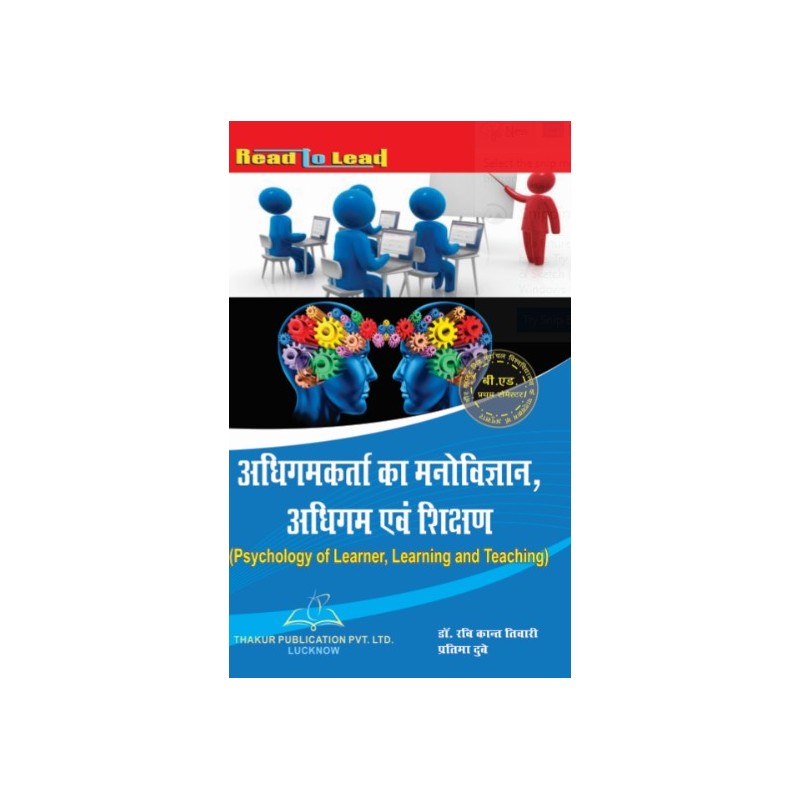
Concept of learning and teaching-Meaning ,scope,need and importance.
Variables in the teaching process-The learning tasks (Instructional objectives), Learner behavior (Entry behavior, Learning style), Teacher behavior(Competence, Expectation, Personality and Teaching style).
Learning theories -Trial & error, conditioning (classical and operant) and social learning, cognitive (insightfull learning and information processing model).
Role of learner in learning situations.
Role of teacher in teaching learning situation –Transmiter of knowledge, model,
facilitator, negotiator, co-learner.
UNIT-2: DEVELOPMENT AND LEARNING
Meaning and principles of development, relationship between development and learning.
Dimension of individual development: physical, cognitive, language, affective, social and moral, their interrelationships and implications for teachers relevent ideas of piaget, Erikson and Kohelberg).
Stages of development: development task with focus on processes growth and development across various stages from infancy to post-adolescence (special emphasis on concerns of adolescence.
Meaning of ‘cognition’ and its role in learning.
Socio-cultural factors influencing cognition and learning.
Facilitating holistic development(for self and society).
UNIT-3: MENTAL PROCESS OF LEARNING
Thinking process - Concept and tools.
Types of thinking - Divergent, convergent, critical, reflective and lateral thinking.
Mental process:
Memory - Concept, types of strategies to develop memory.
Forgetting - Nature, causes,factors and strategies to minimize forgetting.
Imagination - Meaning, types and educational implications.
UNIT-4: INDIVIDUAL DIFFERENCE AMONG LEARNERS
Dimensions of differences in psychological attributes - Cognitiveabilities, interest,aptitude, creativity, personality, values. Under standing learner’s from multiple intelligencs perspective with a focus on gardener’stheory of multiple intelligences, Implicationsfor teaching-learning in the light of changing concept of intelligence, including emotional intelligence. Differences in learners based on predominant ‘learning styles’.
Differences in learners based on socio-cultural contexts: Impact of home languages of learners’ and language of instruction, impact of differential‘cultural capital’ of learners.
Understanding differences based on a range of cognitive abilities: learning difficulties, slow learners and dyslexics, intellectual deficiency, intellectual giftedness. Implications for catering to individual variations in view of ‘differece’ rather than ‘deficit’ persepective.
VBSPU/2019/B.Ed/1/03
48 আইটেম
কমেন্ট (0)
No customer reviews for the moment.
Your review appreciation cannot be sent
Report comment
Are you sure that you want to report this comment?
Report sent
Your report has been submitted and will be considered by a moderator.
Your report cannot be sent
Write your review
Review sent
Your comment has been submitted and will be available once approved by a moderator.