
- Out-of-Stock
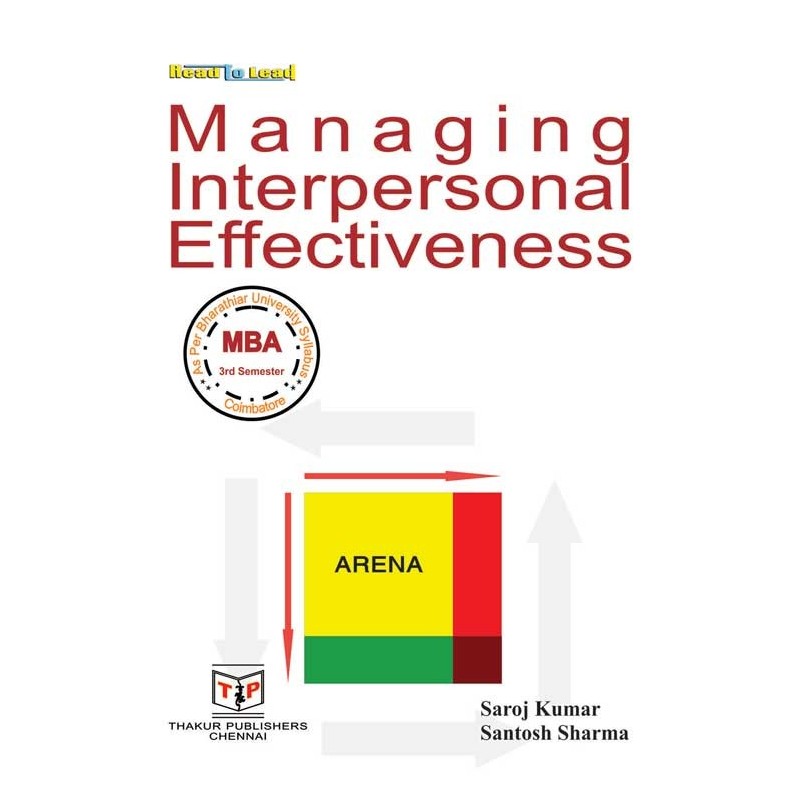


Veera Karoli and Santosh Sharma
MANAGING INTERPERSONAL EFFECTIVENESS
Unit-ISelf-Definition and Perception – Self-Schemes – Gaining Self-Knowledge, Self-Knowledge – Self-Awareness – Self-Effectiveness – Self-Presentation Motives and Strategies – Self-Monitoring – Impression Management. Unit-IICommunication and Language, Models of oral – Qualities and Profile of a Good Speaker – Written – Clarity, Responsibility, Simplicity, Style, Brevity Interpersonal Communication – Barriers – Ways of Overcoming – Non-Verbal Communication – Paralanguage – Eye Contract – Facial Expression – Kinesics, Body Language – Deception, and Detecting Deception. Unit-IIIAssertive Training: Nature – Importance and Relevance to Organizational Life – Assertion and Aggression, Assertive Writing, Preparing for Assertive Business Writing – Tools, Tips, Pitfalls, Persuasion Being assertive with Oneself – Cutting, Rewriting, Editing, Enhance individual assertiveness. Unit-IVTransactional AnalysisIntroduction – Ego States – Exclusion Contamination – Strokes, Life Positions – Types of Transactions – Time Structures – Withdrawal – Rituals – Pastimes –Activities – Games – Types – Stamps – Rackets and Sweat Shirts – Scripts – Advantages and Disadvantages of TA – TA Tips for Performance Interviews – Development Planning with Subordinates – TA Tips for Selection. Unit-VCounseling – Introduction – Other Interventions – Steps, Elements of Counseling – Counseling in Organizations – Training for Counseling. Anxiety and Stress – An Introduction to NLP, – Emotional Intelligence.Your review appreciation cannot be sent
Report comment
Report sent
Your report cannot be sent
Write your review
Review sent
Your review cannot be sent
Veera Karoli and Santosh Sharma
check_circle
check_circle