
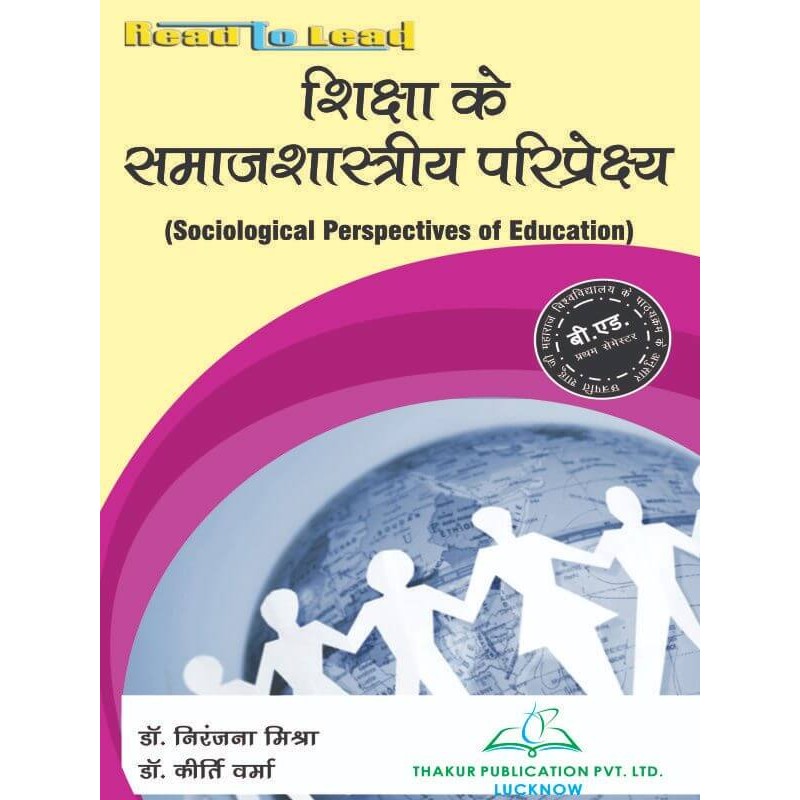


ISBN NO-978-93-90570-38-6
AUTHORS- Dr. Neeranjana Mishra, Dr. Kirti Verma
पाठ्यक्रम
षिक्षा के समाजषास्त्रीय परिप्रेक्ष्य
इकाई-1
1द्ध समाजषास्त्र- अर्थ, प्रकृति, शैक्षिक समाजषास्त्र एवं षिक्षा के समाजषास्त्र में अन्तर, नवीन सामाजिक व्यवस्था, धार्मिक, संस्कृति, भाषा, जाति एवं जनजाति तथा धर्म के सन्दर्भ में सामाजिक विविधता की अवधारणा।
2द्ध शान्तिपूर्ण एवं सामूहिक रूप से रहने (जीने) एवं बहुसांस्कृतिक समाज के लिए विविधता में एकता की स्थापना। धर्मनिरपेक्षता एवं षिक्षा, आर्थिक विकास के उपकरण के रूप में षिक्षा, सामाजिक तथा सांस्कृतिक परिवर्तन।
इकाई-2
1द्ध भारत का संविधान- प्रस्तावना, मौलिक अधिकार एवं नागरिकों के मूलकर्तव्य एवं राज्य के नीति-निदेषक तत्व, षिक्षा से सम्बन्धित अनुच्छेद।
2द्ध स्वतन्त्रता, न्याय, समानता एवं भ्रातृत्व के संवैधानिक वायदों के सन्दर्भ में षिक्षा के लक्ष्यों से सम्बन्धित संवैधानिक मूल्य। षिक्षा एवं लोकतन्त्र।
इकाई-3
1द्ध लिंग (पुरुष, महिला एवं ट्रांसजेंडर), जाति, जनजातियों, विकलांग एवं अल्पसंख्यकों के सन्दर्भ में षिक्षा में समानता के अवसर।
2द्ध षिक्षा के सार्वभौमीकरण के मार्ग में स्थित असमानता, भेदभाव एवं सीमान्तीकरण से सम्बन्धित अवधारणा एवं मुद्दे। समाज को जोड़ने वाले विद्यालयों में षिक्षक की भूमिका।
ृृइकाई-4
1द्ध षिक्षा का अधिकार, सर्व षिक्षा अभियान ;ैै।द्ध, राष्ट्रीय साक्षरता मिषन
(एन.एल.एम.), मिड-डे मील योजना (एम.डी.एम.),
2द्ध सामान्य स्कूल प्रणाली, कस्तूरबा गांधी बालिका विद्यालय (के.जी.बी.वी.), आश्रम पद्धति विद्यालय।
Syllabus
Sociological Perspectives of Education
Unit I
1) Sociology– Meaning, Nature, difference between Educational sociology and sociology of Education, The new social order, concept of social diversity in terms of religion, culture, languages, castes, tribes, religions etc.
2) Establishing unity in diversity and multicultural society for peaceful and collective living. Secularism and education, education as a tool of economic development, Social and cultural change.
Unit II
1) constitution of India: Preamble, fundamental rights and duties of citizens. Directive principles of the state policies, articles related to educational provisions.
2) Constitutional values related to aims of education in the context of constitutional promise of freedom, justice, equality and fraternity. Education and Democracy.
Unit III
1) Equality of educational opportunities in terms of gender (male, female and transgender) caste, tribes, disabled and minorities.
2) Issues and concepts relating to inequality, discrimination and marginalization that stands in the way of Universalization of education. Role of teacher in linking school with society.
Unit IV
1) Right to Education, Sarva Shiksha Abhiyan (SSA), National Literacy Mission (NLM), Mid-Day Meal scheme (MDM),
2) Common School System, Kasturba Gandhi Balika Vidyalaya (KGBV), Ashram Paddhati School.
Data sheet
Specific References
ISBN NO-978-93-90570-38-6
AUTHORS- Dr. Neeranjana Mishra, Dr. Kirti Verma