
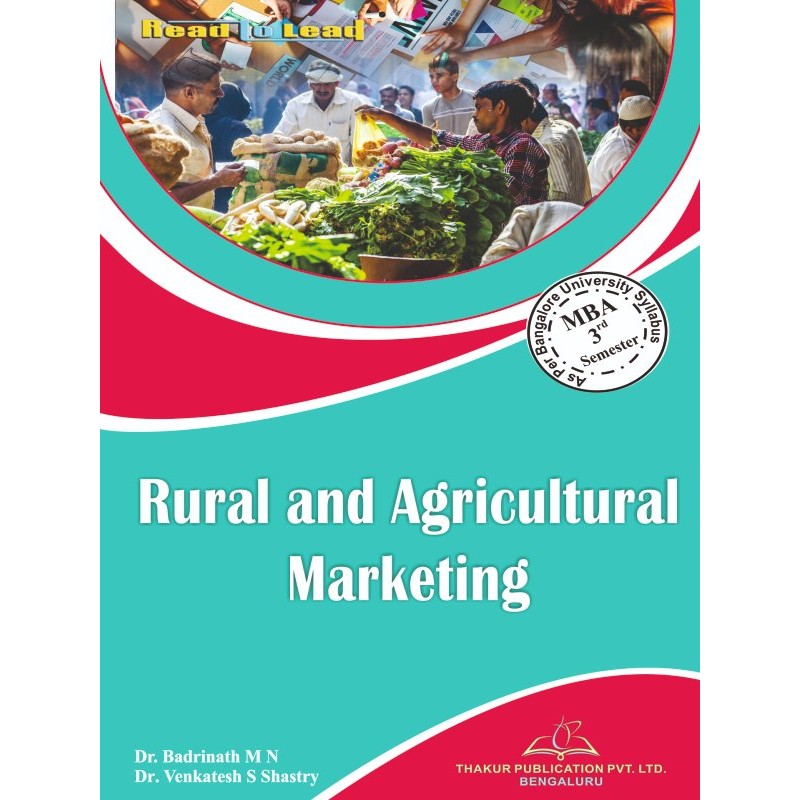


Authors : Dr. Badrinath M.N , Dr. Venkatesh S Shastry
ISBN : 978-93-5480-722-0
Syllabus
Course Code: 3.4.3
RURAL AND AGRICULTURAL MARKETING
Module 1: Introduction to Rural Marketing 8 Hours
Introduction to Rural Marketing: Definition and Scope of Rural Marketing, Components of Rural Markets, Classification of Rural Markets, Rural vs. Urban Markets. Population, Occupation Pattern, Income Generation, Location of Rural Population, Expenditure Pattern, Literacy Level, Land Distribution, Land Use Pattern, Irrigation, Rural Development Programs, Infrastructure Facilities, Rural Credit Institutions, Rural Retail Outlets.
Module 2: Rural Marketing Mix 10 Hours
Segmenting Rural Markets, Rural Marketing Mix Strategies: Positioning in Rural Markets, Rural Product Strategies and Brand Management – Rural Pricing Strategies – Rural Distribution Strategies – Innovative Distribution Channels Like ITC E-Choupal, Godrej Adhar, HUL Shakti, Mahindra Samriddhi sand Godrej Sakhi. Rural Promotional Strategies, Challenges in Rural Communication, Rural Media- Mass Media, Non- Conventional Media, Personalized Media, Rural Media Typology, Rural Media Innovation, Influence of Consumer Behaviour on Communication. Cases on FMCG /Beverages /OTC marketing in rural markets.
Module 3: Rural Marketing Strategies 8 Hours
Marketing Strategies for Rural Markets, Market Research in Rural India Including Findings Published Reports Like Thompson’s Rural Market Index and Similar Ones, Consumer Finance, Public-Private Partnership, E-Rural Marketing, Role of Government and NGOs in Rural Marketing. Qualitative Research Techniques for Rural Research, NSSO Rural Consumption Studies
Module 4: Agricultural Marketing 12 Hours
Agricultural Marketing: Nature and Scope, Objectives of Agriculture Marketing, Classification of Agricultural Products and Markets, how Agricultural Marketing is Different from Rural Marketing, Challenges in Agricultural Marketing, Channels of Distribution for Agricultural Products, Managing Rural Distribution Networks. Government led Incentives for Agricultural Marketing Like Krishimarata Vahini, Online Trading in Karnataka, and Agmarknet, Impact of Rural Credit and Finance on Rural Consumerism – Scope and role of Banking and NBFCs in Rural Markets.
Module 5: Cooperative Marketing 8 Hours
Export Potential for Farm Products - Role of APEDA, Global GAP, International Marketing and Export Process -Supporting Services, Cooperative Marketing – Concept, History, Functions – Reasons for Slow Progress of Cooperative Sector and Successful Cases Such as Amul. Supply Chain Management in Agricultural Products Including Post Harvest Processes and Cold Chains, Commodity Markets and Futures, Understanding the Economics of Fresh, Chilled and Frozen Produce.
Module 6: Future of Rural Marketing 10 Hours
The Future of Rural Marketing, Concept and Working of Contract Farming in India. Suggestions and Group Discussions from Students on the Future of Rural Marketing in India. Case Studies of Safal, Gherkin Exports, and Poultry Farming May be Useful.
Specific References
Authors : Dr. Badrinath M.N , Dr. Venkatesh S Shastry
ISBN : 978-93-5480-722-0